ROLE
UX/UI Design
COLLABORATED with
Product Owner (1)
Researcher (1)
Engineering Team (12)
Background
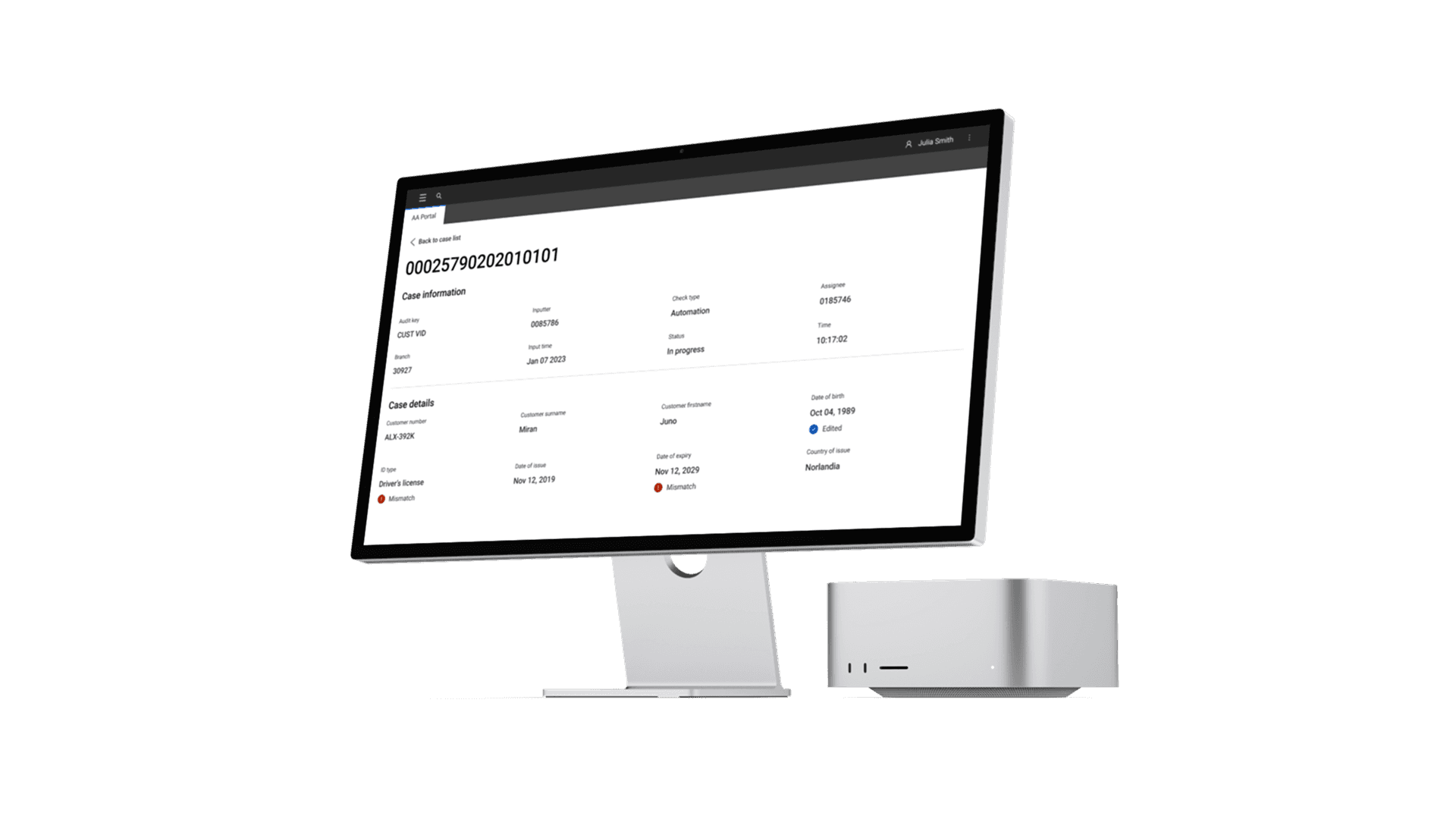
Risk Analysts review customer actions like large transfers or profile changes. A new AI audit engine was planned to be introduced to run initial checks, but many cases still require human review and remediation.
Problem
AI runs first-pass checks, but unresolved cases still require analysts to investigate, judge, and act.
The challenge was not just scaling audits, but redesigning how AI and analysts collaborate to resolve risks across roles.
Business goal
"Enable 100% audit coverage using advanced analytics, and reduce review time, while freeing staff to focus on complex support needs."
Solution
A role-based audit platform that integrates AI first-pass checks with human-led investigation and remediation, designed to support clear decisions, ownership, and cross-role collaboration.
Context
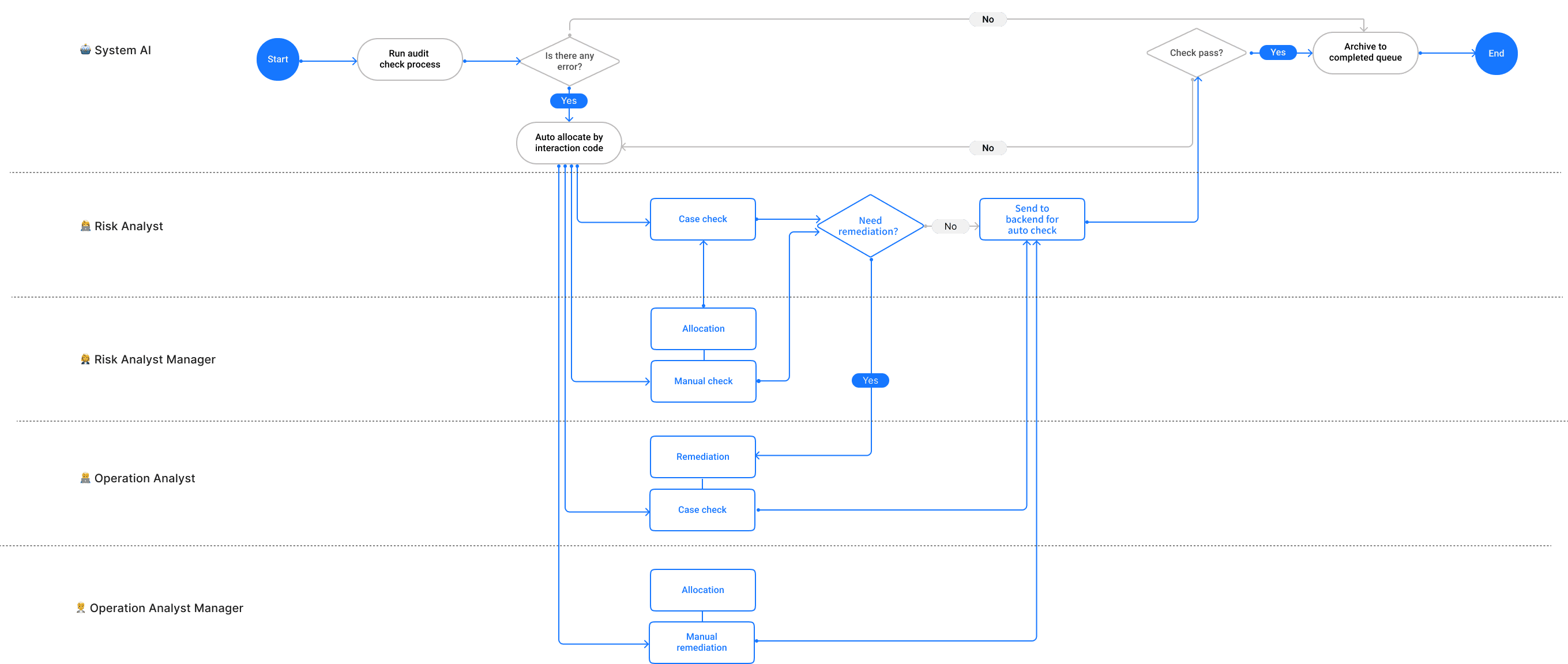
System map
When AI flags an issue, people take over
The system runs an initial audit and auto-allocates unresolved cases to analysts. From there, multiple teams step in: checking, remediating, reallocating, until each case is resolved or passed back to the system.
Context
The Challenge
System Complexity Across Roles & Channels
While AI now handles the initial act, the human side of the system remained unchanged.
Cases that couldn’t be auto-resolved were passed back into existing manual workflows, where Risk Analysts, Operation Analysts, and Team Managers still worked across disconnected tools, channels, and inconsistent review criteria.


Roles
RA (Contact Centre)
RA (Branch)
Operation Analyst
Team Managers
Primary task
Review
Review
Remediate
Manage
Primary channel
Voice
Documents
Documents
Coordination
Tools Used
Call Review system
Excel sheet
Branch document
Note tracker
Internal manual operating system
Excel Dashboard
Email
The challenge wasn’t just fragmented tools, it was fragmented perspectives.
Research
User Problems
Every role engages with the system differently, and every disconnect impacts the outcome. Through conversations with 8 users across risk analysis, remediation, and management, we uncovered recurring friction points that shaped our design direction.
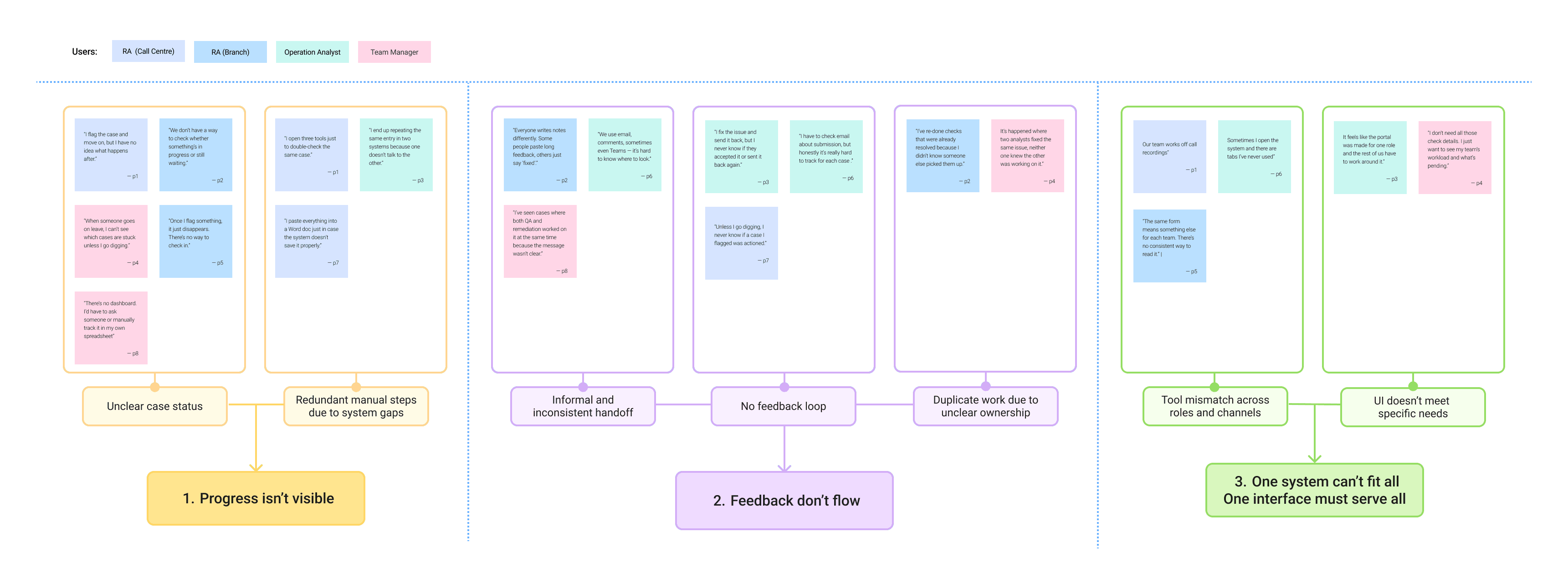
Insights we gained:
Progress isn’t visible
Feedback doesn't flow
One system can’t fit all, but one interface must serve all
Solution
Design Decisions
Instead of designing separate tools for each role, I structured the system around shared decision points across the review lifecycle, allowing feature reuse while preserving role-specific focus and accountability.
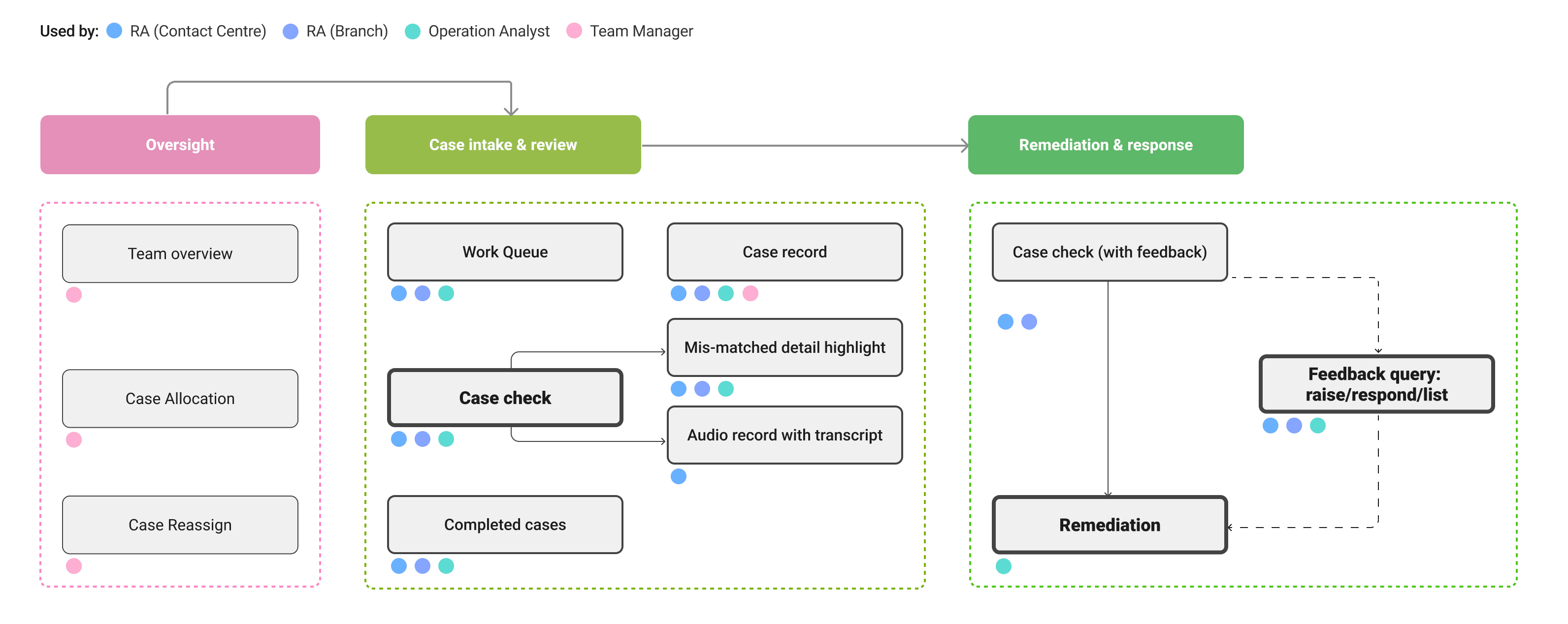
While the system includes multiple supporting flows, the primary design focus was placed on decision-heavy moments where attention, context, and accountability most directly impact outcomes.
The following iterations show how these decision points were refined through concrete design trade-offs.
Iteration snap
Handover flow
Building on the mapped-out cross-role journeys and shared feature needs, I explored multiple interaction patterns to balance usability, development effort, and business constraints.
These early decisions were made through quick ideation and close alignment with business and engineering, which helped reduce risk before moving into detailed design.
Ideation
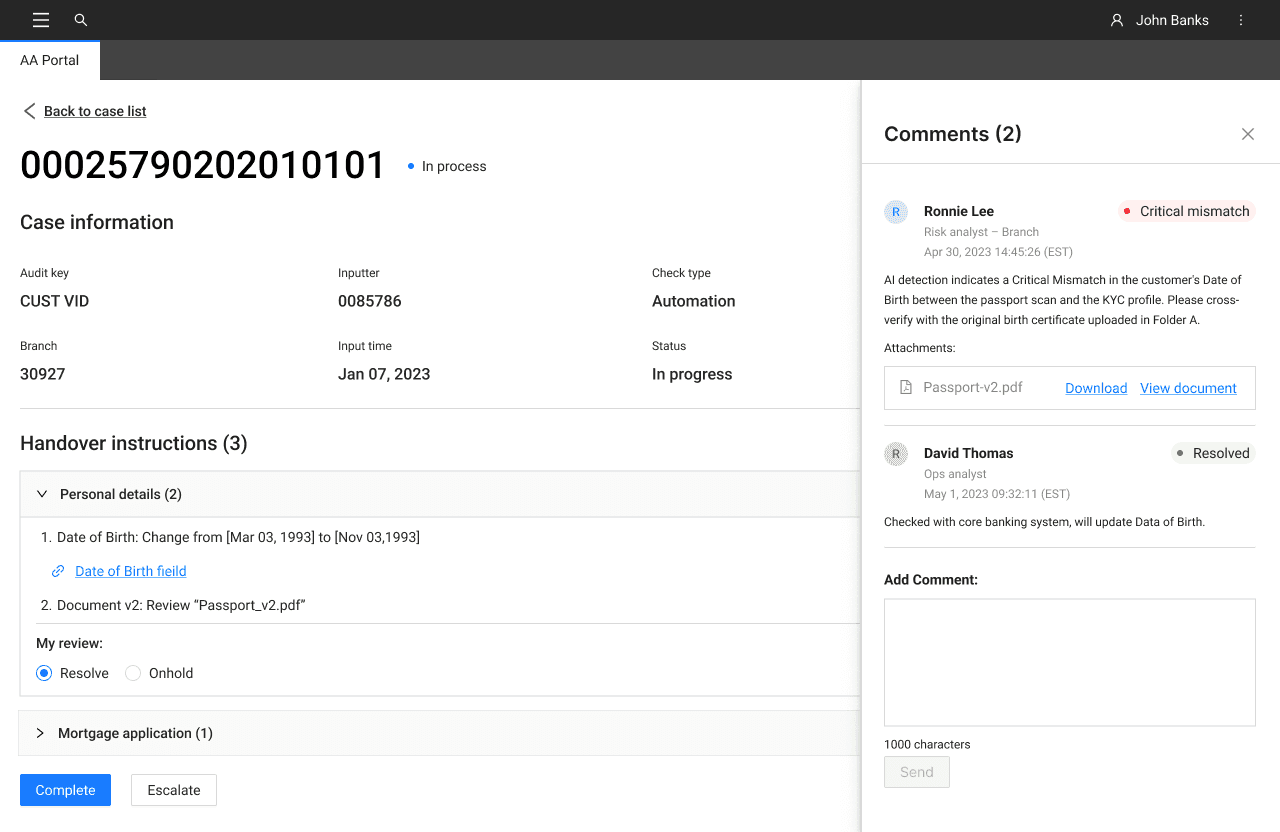
I conducted a trade-off analysis between a modal and a side panel for cross-functional alignment with business and technical teams. The side panel was ultimately selected to eliminate 'contextual blindness' and allow auditors to simultaneously reference case instructions while updating details in a single view.
Modal
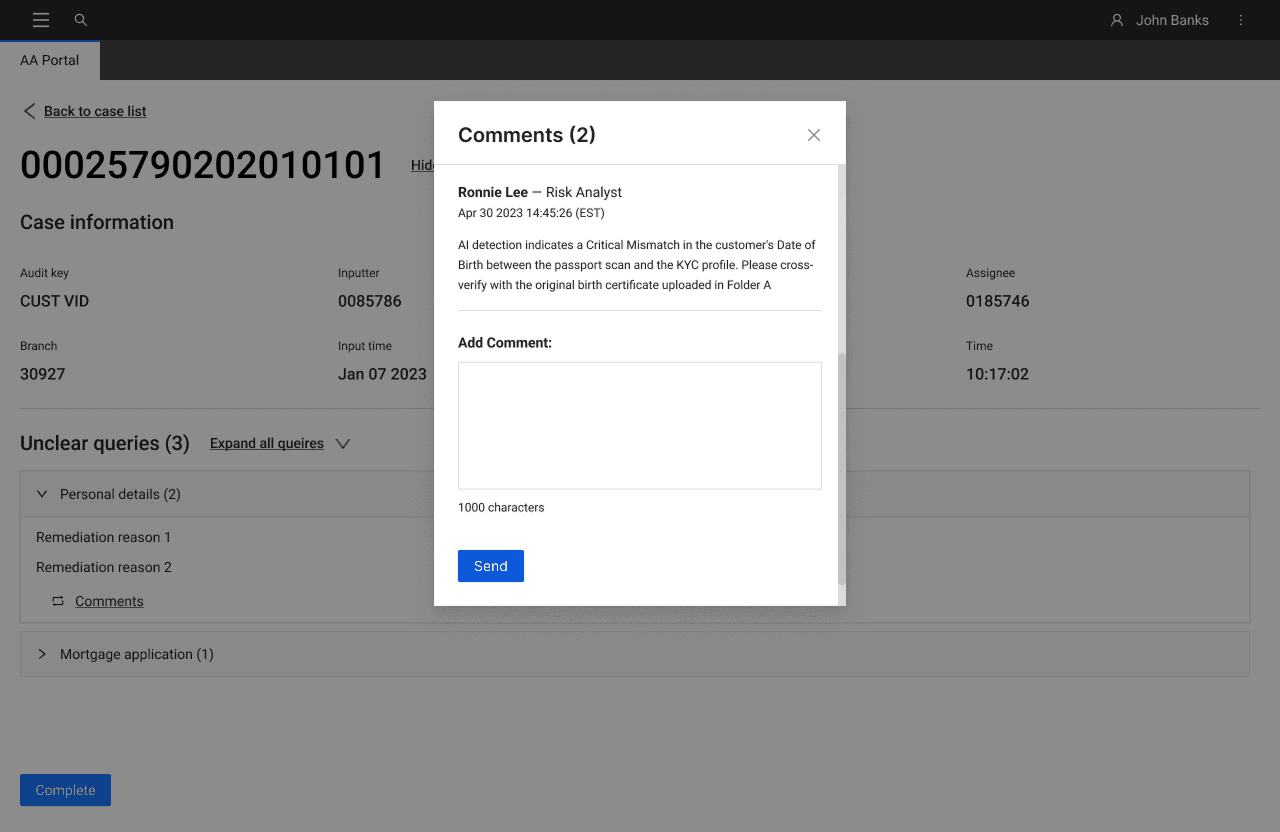
✅ Part of the existing component library.
❌ Covers the main form, creates contextual blindness.
❌ Requires constant opening/closing, breaks the operation flow.
VS
Side Panel
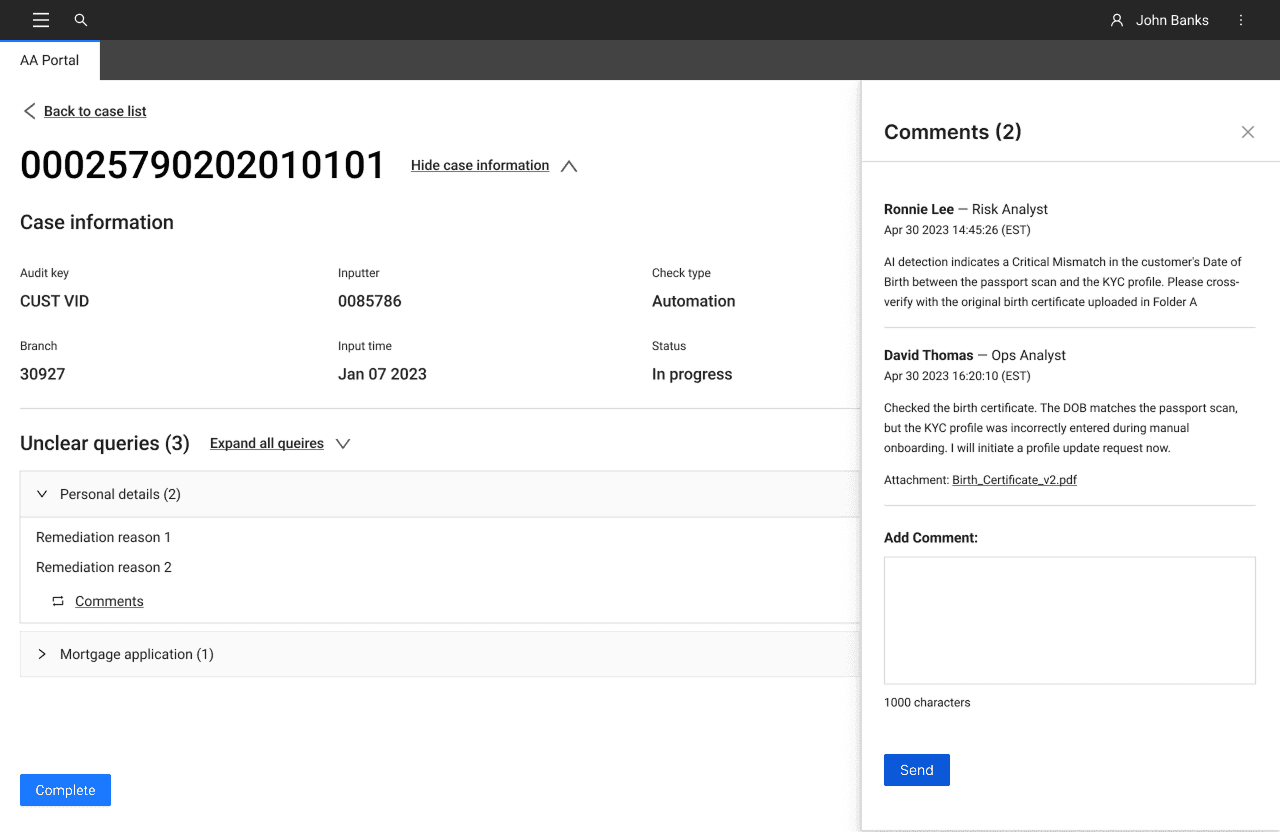
✅ Can read instructions and update case details in the same view.
✅ Supports long threads with more vertical space.
❌ Narrower main content may affect usability on smaller screens.
User testing
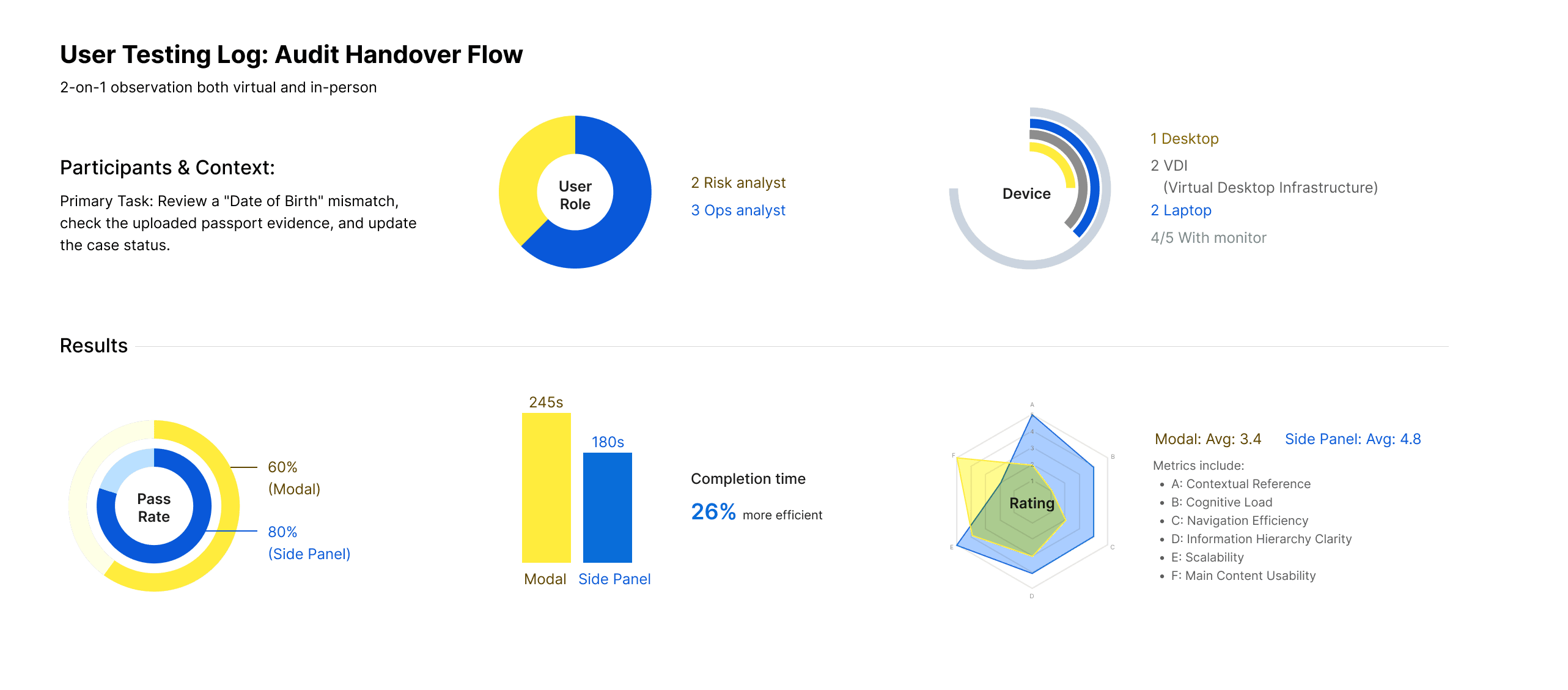
The side panel was ultimately selected to allow auditors to simultaneously reference case instructions while updating details in a single view.
This shift addressed 'contextual blindness' and reduced average task completion time by 26%
Converting Qualitative Feedback into Design Precision
While the side-by-side workflow was a strategic win, V1 user testing highlighted several 'Micro-Friction' points. I synthesized these insights to refine the V2 interface.
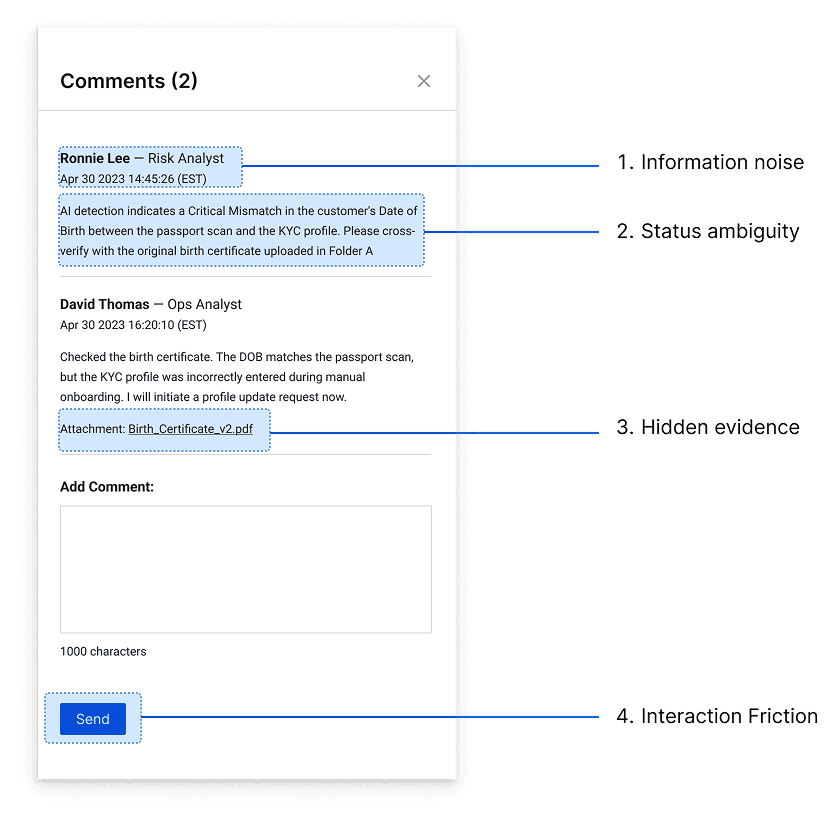
User voice:
🧑💻
"There is too much 'noise' around the comments."
🧑💻
"The comments tell me what's wrong, but I have to read the whole paragraph just to know if the issue is still open or already fixed."
🧑💻
"I saw a mention of a 'Passport.pdf,' but I had to search through the text to find the blue link. It doesn't look like a file."
🧑💻
"I wasn't sure if my comment actually sent or if the field was just empty."
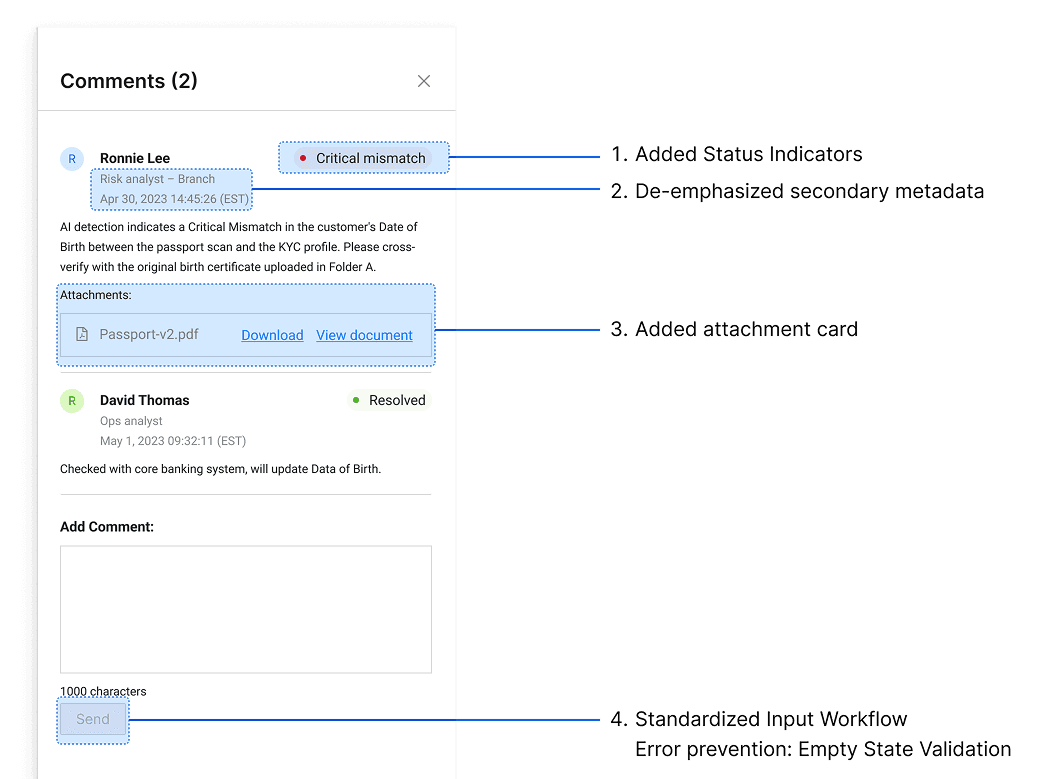
Design response:
Enhanced Status Logic
Information Density
Evidence Preview Optimization
Error Prevention
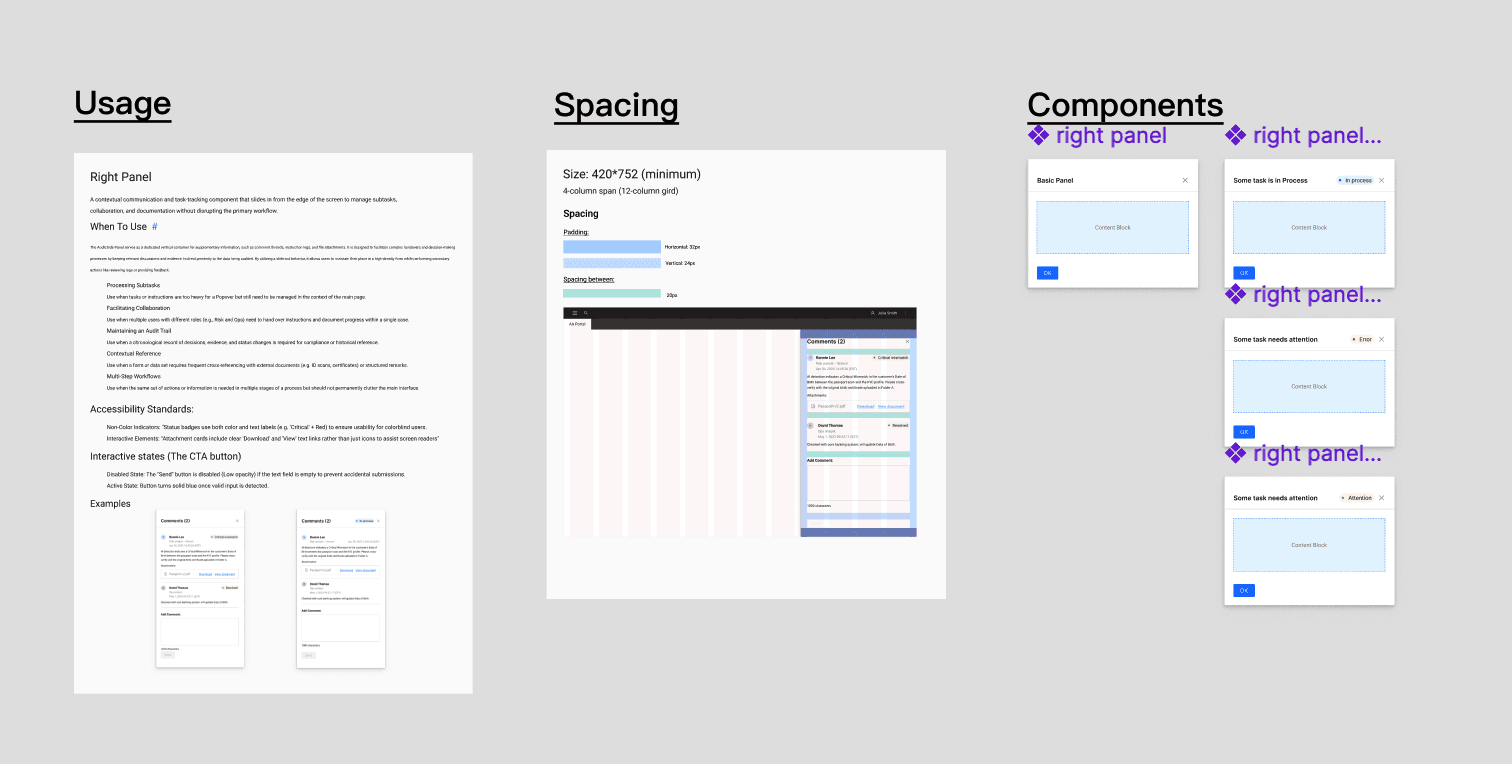
Design System
The Side Panel
I established a standardized component specification for the side panel, defining the usage guidelines, grid-based spacing, and multi-state variants to ensure cross-product consistency.
Solution
Final design highlights
Each of these design highlights responded to the challenges uncovered during early research and workflow analysis, helping resolve key pain points around clarity, task ownership, and team coordination.
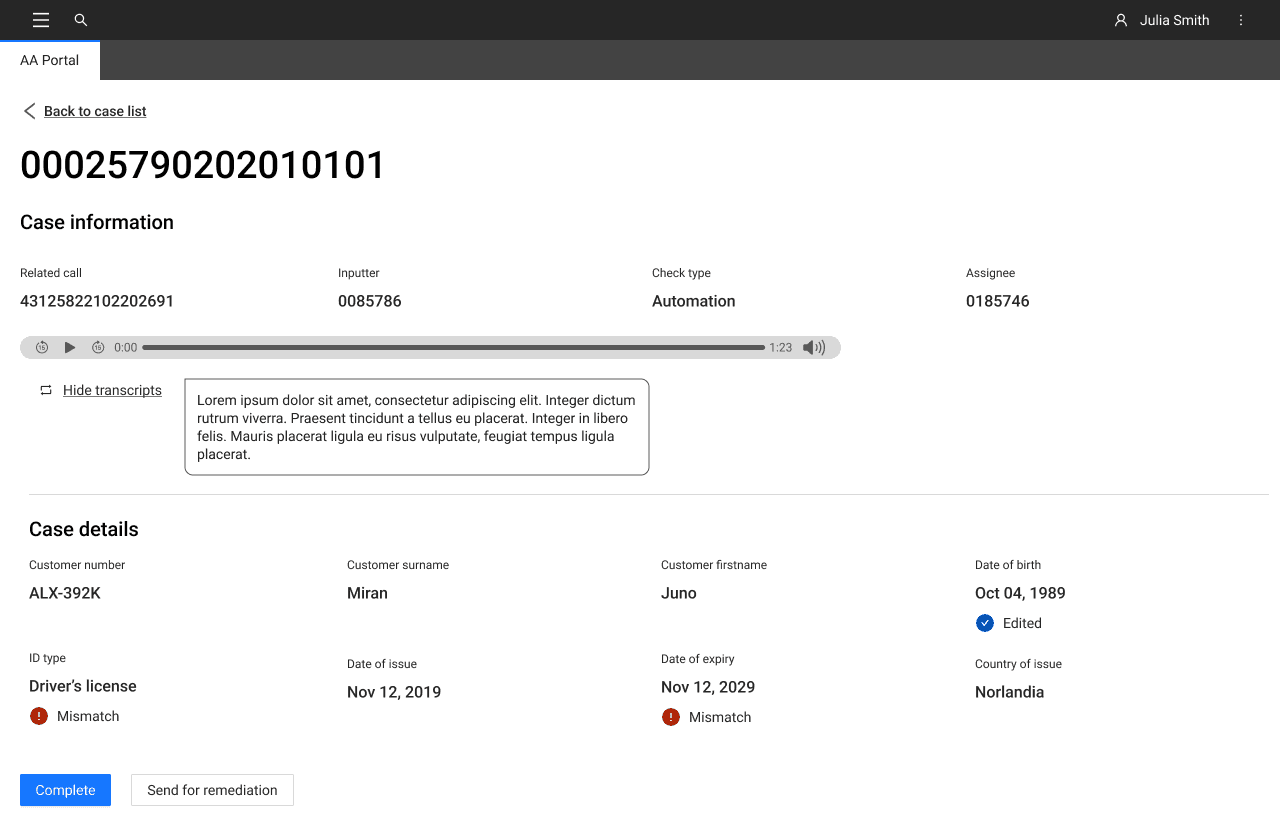
Document/Audio Case Check
Reduced context switching and improved efficiency
by tailoring the case check interface to match different workflows in branches and contact centres, including inline audio playback and transcript access.

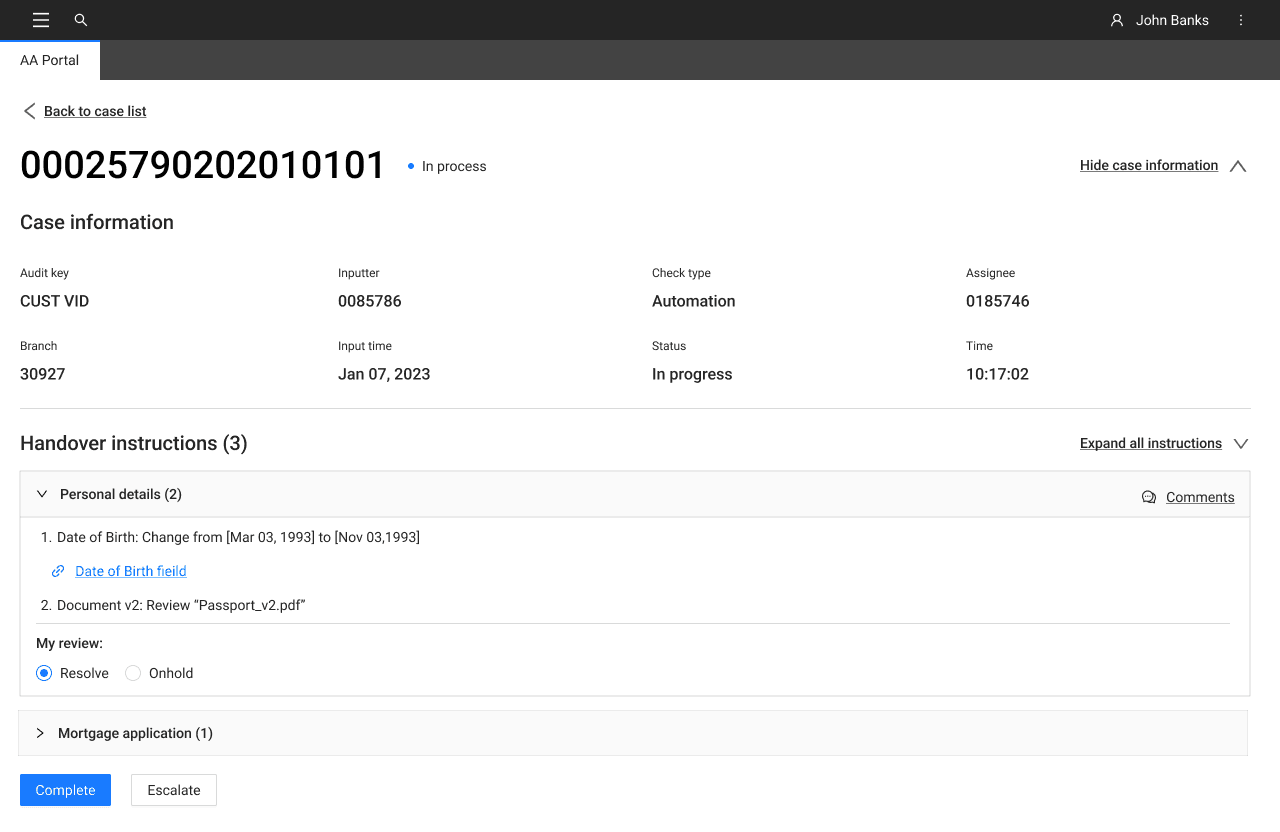
Remediation Query
Streamlined cross-role communication
by redesigning the query workflow into a collapsible side panel, enabling clear categorization, quicker reference, and shared visibility of case history and discussions.
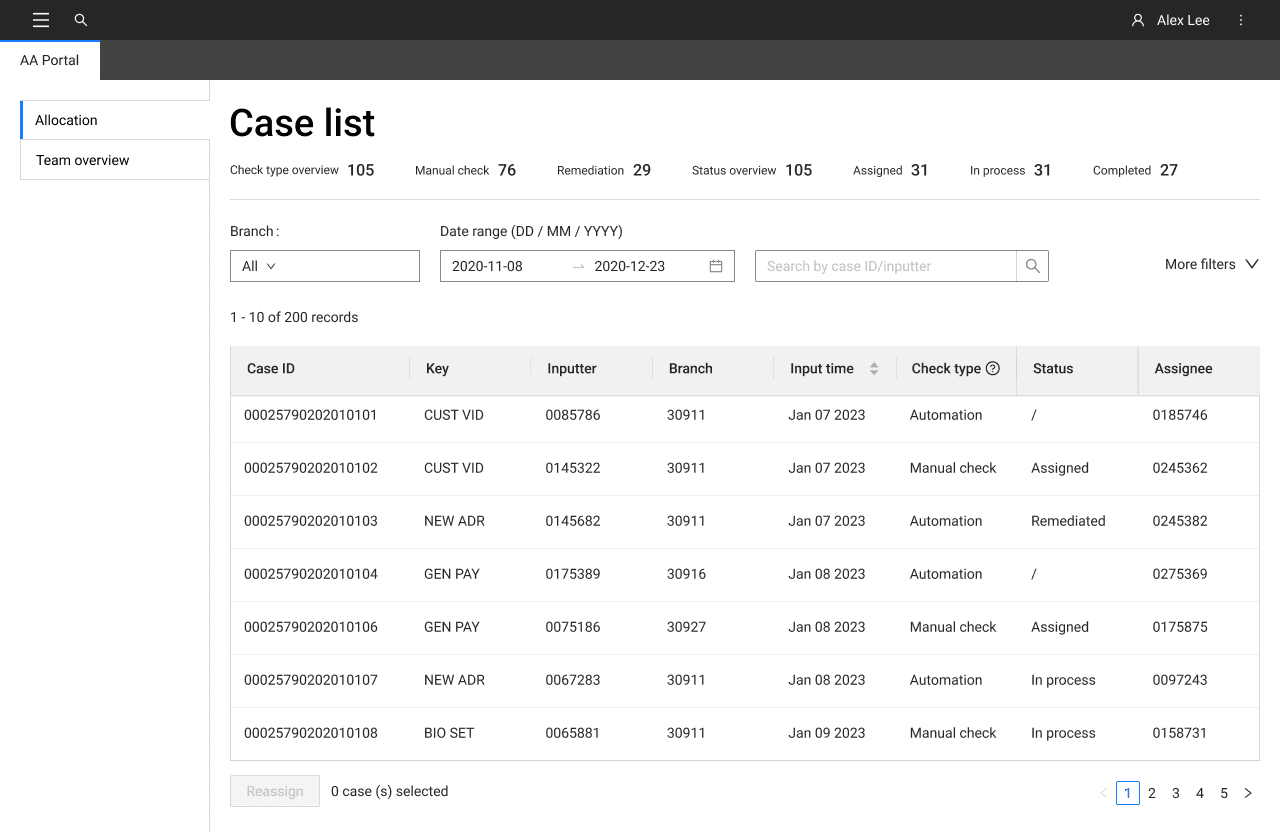
Case Allocation with Dashboard
Helped managers make faster and more informed allocation decisions
by combining real-time team availability, case load, and status overview into a single screen.
Reflection
Takeaways
This was the first end-to-end product I led from early research to design execution, marking the beginning of my professional journey.
This project reminded me that thoughtful design isn’t always about reinventing interfaces, it’s about aligning with real-world constraints while still improving clarity, efficiency, and trust.
By grounding early ideation in user needs and system limitations, I was able to facilitate alignment across design, engineering, and business.
Balancing usability with implementation effort became a recurring challenge, but also a valuable opportunity to practice strategic prioritization, advocate for scalable patterns, and build shared understanding among teams.
Next Project
Role
UX/UI Designer